
The digital business landscape has fundamentally transformed how companies protect their critical assets. As we navigate the complex cybersecurity environment of 2026, AI-Driven Cyber Insurance Risk Assessments have emerged as the ultimate standard for carriers evaluating enterprise security. Insurers no longer rely solely on static questionnaires and manual audits. Instead, they deploy sophisticated artificial intelligence to scan attack surfaces and predict vulnerabilities in real time.
The modern enterprise no longer relies on a single digital basket. To avoid vendor lock-in, maximize uptime, and leverage best-of-breed features, organizations are rapidly adopting multi-cloud strategies. Spreading workloads across Amazon Web Services (AWS), Microsoft Azure, and Google Cloud Platform (GCP) offers undeniable operational flexibility. However, this architectural freedom introduces a steep, often invisible price tag. Managing fragmented ecosystems exposes organizations to severe, hidden security risks that traditional defense frameworks fail to detect.
As organizations rapidly migrate their operations to the cloud, securing digital assets has become an absolute business imperative. Amazon Web Services (AWS) provides an incredibly robust, scalable, and flexible infrastructure for modern enterprises. However, the sheer complexity of cloud environments can open unexpected vulnerabilities if configuration management is neglected. Prioritizing AWS Security is no longer just a technical checkbox for IT departments; it is a foundational pillar of modern risk management and corporate governance. Failing to secure cloud workloads can lead to catastrophic data breaches, severe financial penalties, and a devastating loss of customer trust.

The Invisible Threat In Your Corporate Inbox. A single notification appears in your financial controller’s inbox on a quiet Friday afternoon. The message comes from your company’s chief executive officer. It requests an immediate, confidential wire transfer to finalize an urgent corporate acquisition. The writing style matches the executive’s voice perfectly, the corporate logos look flawless, and the email address appears legitimate. The financial controller processes the $150,000 transaction immediately to hit the deadline. By Monday morning, your leadership team discovers a devastating truth: the CEO never sent the message. Your organization has just joined thousands of global enterprises devastated by Business Email Compromise (BEC).

Cybersecurity is entering a new era. Attackers no longer rely solely on manual tactics or human decision-making. Instead, they are increasingly leveraging artificial intelligence, machine learning, and automation to launch sophisticated attacks at unprecedented speed and scale. This shift has fueled the rise of Autonomous Cyberattacks, a growing threat that challenges traditional security strategies and forces organizations to rethink how they defend their digital environments.
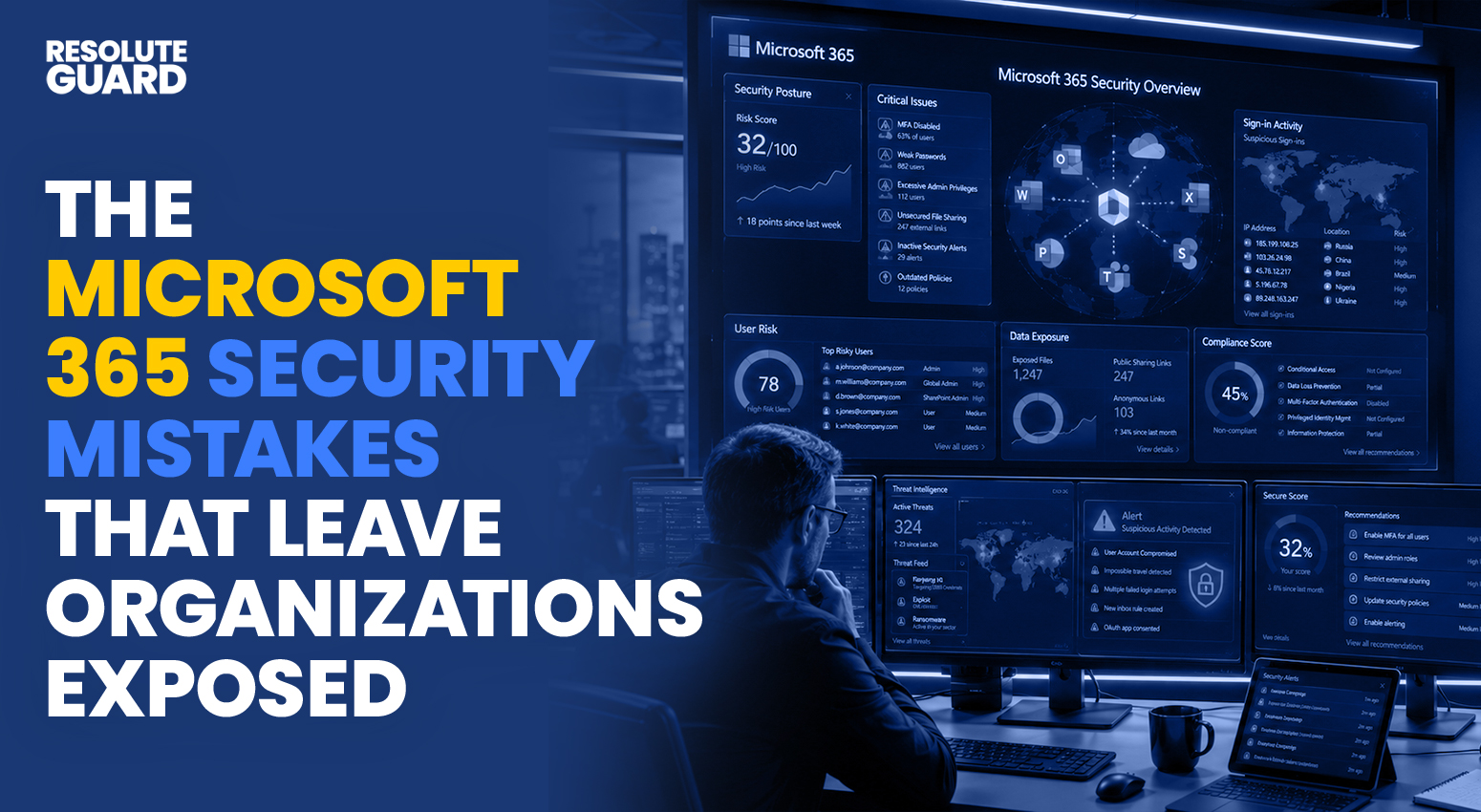
Microsoft 365 powers email, file storage, and team collaboration for millions of businesses across the country. Yet many of those same businesses unknowingly leave the door wide open for attackers. Microsoft 365 security mistakes happen quietly, often buried inside default settings that nobody bothered to review. A single misconfigured permission or a skipped security feature can turn a trusted productivity suite into an attacker’s easiest way inside your network. IT teams juggling dozens of priorities rarely have time to audit every setting, which is exactly why these gaps tend to linger for months without anyone noticing. This article breaks down the most common mistakes, explains why they matter, and shows you exactly how to fix them before they cost your organization data, money, or customer trust.
Cybercriminals are no longer relying on clumsy phishing emails and easily spotted scam calls. AI-Powered Deepfake Fraud has become one of the most dangerous and rapidly evolving threats targeting businesses across every industry. Using generative AI, bad actors now clone executive voices, fabricate live video calls, and impersonate company leadership with terrifying precision — often in real time. These synthetic media attacks bypass conventional security controls and exploit the one vulnerability that no firewall can fully defend: human trust. The organizations that fail to prepare for this threat today will be the ones writing the headlines tomorrow.
The debate over whether AI can replace security analysts has moved well beyond conference panels and into boardrooms, budget conversations, and hiring freezes. Business leaders evaluating their security spending are asking hard questions: Do we still need expensive, difficult-to-recruit human analysts when AI platforms promise faster detection, broader coverage, and dramatically lower cost? It is a legitimate question — and it deserves a direct, honest answer grounded in how cybersecurity actually works.
The cybersecurity industry has entered one of the most disruptive periods in its history. Cybercriminals using generative AI are no longer a theoretical warning — they represent an active, well-documented, and rapidly accelerating threat already reshaping the attack landscape across every sector. Capabilities that once required years of specialized expertise and substantial financial resources are now accessible to virtually any motivated bad actor willing to exploit the technology. Large language models, voice synthesis platforms, deepfake video generators, and automated code-writing tools are being repurposed as weapons, producing attacks that are faster, more believable, and far harder to detect than anything the industry has previously encountered.
Security awareness training is broken — and the cybersecurity industry has known it for years, even if most organizations still act like it isn’t. Despite billions of dollars in program spending annually, data breaches driven by human error continue to surge. Employees click phishing links, fall for impersonation scams, and approve fraudulent transfers even after completing mandatory training. The problem isn’t a lack of training investment.